
Clean MRI, Injured Brain: How to Win Your Mild TBI or Post-Concussion Lawsuit in Oakland
A traumatic brain injury (TBI) can result from a severe car accident, a slip and fall, a construction mishap, or any sudden blow or jolt to the head. While many associate TBI with obvious, catastrophic symptoms, the most common—and arguably most complex—type of brain injury we handle for clients in the Oakland and San Francisco Bay Area is Mild TBI (mTBI), often referred to as a concussion, or its lasting iteration, Post-Concussion Syndrome (PCS).
If you or a loved one are struggling with persistent headaches, chronic dizziness, memory problems, fatigue, or inexplicable mood swings weeks or months after an accident, you may have a serious TBI claim. These injuries are often “invisible,” meaning they do not appear on standard diagnostic imaging. Successfully proving them in a personal injury lawsuit requires a highly specialized legal strategy that transforms subjective pain into objective, undeniable legal proof.
The Central Challenge: Why Insurers Aggressively Fight Mild TBI Claims
Insurance carriers and defense attorneys aggressively dispute mTBI and PCS claims primarily because of the lack of immediate, objective evidence.
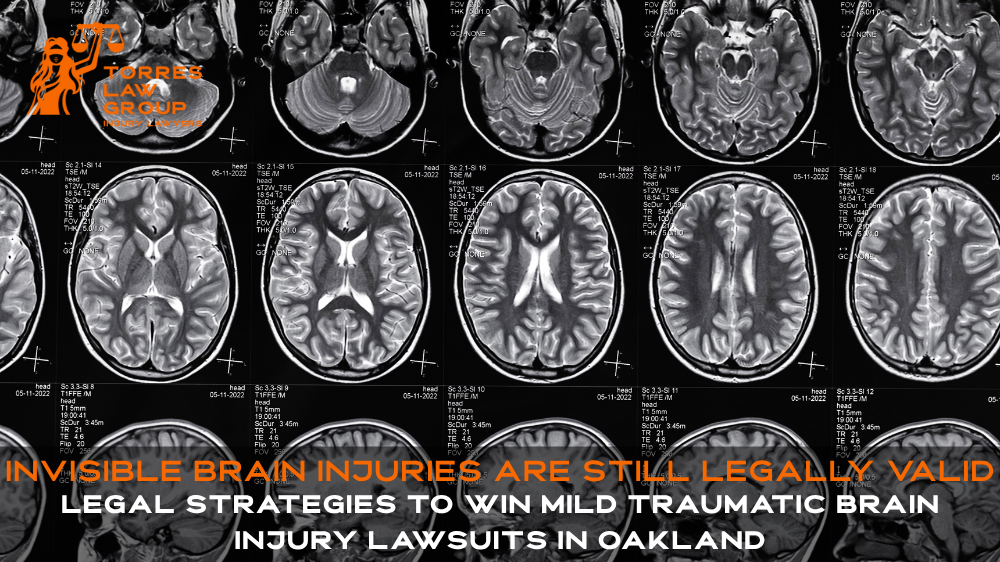
In a typical personal injury case, a broken bone or severe laceration is easily verified by X-ray or visible trauma. However, a mild TBI or Post-Concussion Syndrome often does not show structural damage on standard tests like a CT scan or a traditional MRI. Insurance adjusters exploit this “clean scan” gap to argue that:
- The symptoms are Subjective and Exaggerated: They claim the client’s reported dizziness, memory lapses, chronic fatigue, or depression are subjective, fluctuating, or simply “all in their head”.
- Causation is Unclear: They allege that pre-existing conditions, general aging, or non-accident-related psychological factors—not the traumatic event—are the true cause of the symptoms, attempting to shift or eliminate liability.
Successfully winning a mild TBI lawsuit in California requires overcoming this skepticism with a strategy rooted in specialized medical evidence and meticulous documentationThe Key Evidence: Turning Invisible Injury into Objective Legal Proof
As specialized TBI lawyers in Oakland, our firm focuses on securing two critical categories of evidence that the defense counsel cannot dismiss: objective quantification and long-term documentation.
1. Neuropsychological Testing: Quantifying Cognitive Loss
When standard imaging fails, a comprehensive evaluation by a Neuropsychologist becomes the foundation of your claim. This testing is specifically designed to quantify cognitive impairment in objective, measurable terms, providing hard data to prove functional deficits that are otherwise invisible.
A qualified neuropsychologist conducts specialized tests to measure and quantify areas such as:
Memory Deficits: Proving loss of short-term or working memory.
Attention and Focus: Quantifying reduced processing speed and inability to concentrate.
- Executive Functioning: Measuring the inability to plan, organize, and execute complex tasks.
The results of this testing are often expressed in quantitative terms, such as IQ points or standardized scores, which helps a jury understand the extent of the plaintiff’s functional deficiency. This testing is crucial because it can also preemptively identify and rule out malingering or distinguish the current injury from any pre-existing conditions, which are two of the most common defense strategies.
2. Longitudinal Documentation of Daily Life and Observed Change
TBI symptoms like mood changes, inability to tolerate noise, or severe fatigue cannot be seen on a scan. Therefore, we guide clients to rigorously document the impact of their injuries on their daily routine, transforming subjective experience into legally admissible evidence:
Personal Journals and Diaries: Tracking the frequency and severity of symptoms, mood swings, and memory issues since the accident.
- Statements from Family, Friends, and Employers: Securing credible testimony from those who knew the client beforethe injury. These statements attest to observed cognitive and behavioral changes, establishing a clear change in functionality and personality that directly contradicts the defense’s claim of exaggeration.
This daily record establishes a critical timeline and helps a judge or jury understand the true extent of the suffering and functional disability, which is essential for maximizing your Post-Concussion Syndrome settlement value.
Understanding Injury Severity: The Glasgow Coma Scale (GCS)
While focusing on mTBI is strategic, all brain injuries must be classified to assess potential case value and long-term prognosis. The medical community uses the Glasgow Coma Scale (GCS) to define injury severity :
- Mild TBI (Concussion): Typically does not have an explicit GCS range, but is characterized by a brief or no loss of consciousness.
- Moderate TBI: Involves a loss of consciousness for 20 minutes up to 6 hours and corresponds to a GCS rating of 9 to 12
- Severe TBI: Includes a loss of consciousness lasting longer than 6 hours and corresponds to a GCS rating of 3 to 8.
Even a diagnosis of mTBI means you have suffered a physical injury to your brain. However, if your accident resulted in a higher GCS rating, you need a firm with the financial resources to handle a catastrophic injury claim—cases that often result in multi-million dollar recoveries.
The Expert Witness Strategy: Building an Unassailable Case
TBI litigation is often a battle of experts. The most successful Bay Area TBI lawyers do not rely solely on the initial treating physicians; they invest heavily in a robust team of specialized witnesses.
Our legal strategy involves coordinating testimony from:
Neurologists and Neurosurgeons: To establish the physical mechanism of injury, the immediate medical severity, and the need for ongoing neurological care.
Neuropsychologists: As noted, these experts provide the quantitative data necessary to prove cognitive deficit to a jury.
- Life Care Planners: These specialists are critical in catastrophic TBI cases. They accurately project the costs of long-term care over the victim’s lifetime, including future doctor visits, medications, assistive devices, specialized rehabilitation, and necessary home modifications.
- Vocational Experts: If the TBI prevents a client from returning to their pre-injury job, vocational experts determine the loss of future earning capacity, providing a definitive calculation of the victim’s lifelong economic loss.
This sophisticated, multi-expert approach signals to the insurance company that we are prepared to take the case to trial and have the resources to finance the litigation needed to secure “full compensation”.
Calculating Damages: Recovering Full Compensation for a Lifetime of Loss
A TBI is not a temporary inconvenience; it is often a lifelong disability that generates immense financial and non-economic damages. Under California law, TBI victims may recover compensation for a wide array of losses, including :
- Medical Expenses: Covering emergency care, surgery, rehabilitation, and all future projected treatment costs, as detailed by the Life Care Planner.
- Lost Wages and Loss of Earning Capacity: Compensation for income already lost, as well as the projected loss of income over the client’s entire working life, as calculated by vocational experts.
- Pain and Suffering: Compensation for physical pain, emotional distress, anxiety, and depression caused by the injury.
- Loss of Enjoyment of Life: Damages for the inability to participate in hobbies, social activities, or daily life activities that the victim previously enjoyed, which is critical in PCS claims.
- Costs of Long-Term Care: Including assistive devices, home health aides, and specialized living arrangements.
Critical Deadlines: Protecting Your TBI Claim Right Now
The single biggest mistake you can make in a TBI case is waiting too long to act.
In California, the Statute of Limitations (SOL) for filing a personal injury lawsuit, including a TBI claim, is generally two years from the date of the injury. However, several critical nuances apply to TBI:
- The Discovery Rule: Because TBI and PCS symptoms may have a delayed onset or initially be masked by other injuries , the SOL clock can, in some cases, start counting from the date the injury or trauma was discovered or reasonably should have been discovered. This rule is highly fact-specific and complex, demanding immediate legal review.
- Immediate Evidence Preservation: Even with a two-year deadline, waiting is detrimental. TBI evidence—including immediate medical observations, witness accounts, and the state of the accident scene—is highly perishable. Consulting an attorney immediately helps secure and preserve crucial evidence before it is lost.
- Government Entity Claims: If your TBI resulted from an accident involving a public entity, such as a BART train, a city bus (AC Transit), or a fall on an Oakland city sidewalk, the deadline to file a formal government claim is substantially shorter than the two-year SOL
Do not let the complexity of deadlines, the ambiguity of symptoms, or the aggressive skepticism of insurance companies derail your recovery.
Call an Oakland TBI Lawyer Today. We are Bilingual.
If you or a family member is struggling to prove a mild TBI or Post-Concussion Syndrome case in the Oakland area, do not let insurance adjusters dictate your recovery. Torres Law Group inc. has the specialized medical-legal knowledge, financial resources, and courtroom experience to secure the full compensation you deserve.
Call us now for a 100% Free and Confidential Case Review. Hablamos Español. ☎️ 800-601-3385