
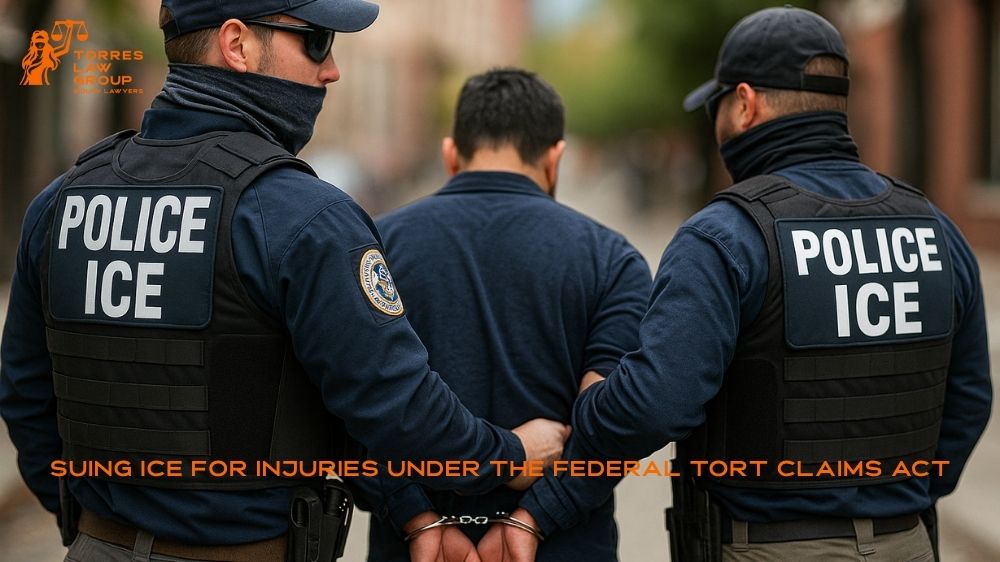
Oakland Personal Injury Lawyer: Suing ICE for Injuries Under the Federal Tort Claims Act
When Federal Enforcement Goes Too Far
If you or a loved one were hurt during an encounter with U.S. Immigration and Customs Enforcement (ICE) in Oakland or anywhere in Alameda County, you’re likely juggling medical bills, missed work, and serious questions about accountability. The Federal Tort Claims Act (FTCA) is the primary pathway to pursue money damages from the United States when a federal employee’s negligence—or certain intentional misconduct by law-enforcement officers—causes harm. In FTCA cases, federal courts apply the law of the state where the injury occurred (here, California), making local experience indispensable for building a persuasive case for your ICE injury claim in Oakland.
What Is the FTCA and Why It Matters in ICE Injury Cases
The FTCA waives sovereign immunity in defined circumstances, allowing people injured by federal employees acting within the scope of their employment to seek compensation from the United States. Before any lawsuit is filed, you must present an administrative claim to the correct federal agency; only after the agency denies it (or six months elapsed without a decision) can you sue.
In Oakland-area ICE encounters, claims are typically presented to ICE’s Office of the Principal Legal Advisor (OPLA). Use Standard Form 95 (SF-95) or another written notice that includes a “sum certain”—a specific dollar amount you’re claiming. Without a sum certain, the claim is defective.
Key deadline: Present your administrative claim within two years of when your claim accrues; if the agency issues a written denial, you generally have six months to file suit in federal court. This time limit to file a claim against ICE is strict and unforgiving.
When Officer Misconduct Is Involved: The “Law Enforcement Proviso”
The FTCA usually bars claims for intentional torts, but Congress carved out a critical exception for federal “investigative or law enforcement officers”—including officers empowered to search, seize, or arrest. For those officers, the U.S. can be liable for assault, battery, false imprisonment, false arrest, abuse of process, or malicious prosecution. The Supreme Court has confirmed this proviso applies to all acts within the scope of employment, not just investigatory acts.
That said, FTCA claims remain subject to other limits (for example, the discretionary-function exception). The Ninth Circuit recognizes that the law-enforcement proviso does not automatically override the discretionary-function exception—so careful legal analysis is required in each case.
What Kinds of ICE Conduct Lead to FTCA Lawsuits?
Our firm focuses on helping clients recover for injuries stemming from conduct such as:
Excessive Force: Injuries from unwarranted use of physical force, including severe restraints, unjustified takedowns, or being struck. (Targets: ICE excessive force lawsuit Oakland)
Negligent Driving: Collisions caused by agents driving negligently during surveillance, pursuits, or transport, resulting in personal injury. (Suggest internal link to: Car Accidents – “Oakland car accident lawyers”)
False Imprisonment/Arrest: Unlawful detention that leads to emotional distress, lost wages, or physical injury during the arrest process.
Failure to Provide Medical Care: Negligent delay or refusal of critical medical attention while in custody or immediately following an incident.
Step-by-Step: How to Start an FTCA Claim After an ICE Injury
Get immediate medical care—and document everything: Your health comes first. Keep discharge summaries, imaging, prescriptions, and follow-up plans. These records will anchor your damages.
Preserve evidence: Save photos/videos of injuries, torn clothing, property damage, and the scene. Capture dates, locations (e.g., Fruitvale, West Oakland, San Leandro border), and any badge names or vehicle identifiers. Collect witness names/contacts.
Present an administrative claim to ICE/OPLA: Use SF-95 or equivalent written notice. Include: claimant info, date/time/location, detailed facts, and a sum certain for all claimed damages. Attach key records or a proof-of-loss packet if available.
Track the statutory clock: Two years to present to the agency. After final denial, six months to sue (or sue anytime after six months of inaction).
Venue and forum: If litigation becomes necessary, FTCA suits are filed without a jury in U.S. District Court, in the district where you live or where the incident occurred. For Oakland cases, that’s typically the Northern District of California. We are deeply familiar with the judges and procedures unique to the Northern District of California, which serves Oakland and the greater Bay Area.
What Damages Are Recoverable?
Under the FTCA, the U.S. is liable to the same extent as a private party under California law—but punitive damages and prejudgment interest are not available. Recoverable categories usually include medical expenses (past/future), lost earnings or earning capacity, household services, and general damages (compensation for injuries caused by ICE agents such as pain, suffering, inconvenience).
Attorney’s fees are strictly capped by statute: 20% of an administrative settlement or 25% if the case proceeds in federal court.
Comparative Negligence in California Still Applies
Because FTCA cases apply the law of the place, California’s pure comparative negligence framework governs liability apportionment. Even if an injured person is found partially at fault, they can still recover—reduced by their percentage of fault.
Immigration Status: Your Rights Don’t Disappear
In California civil injury cases, immigration status is not admissible and is generally not discoverable in personal-injury or wrongful-death actions. Clients should not be deterred from seeking medical care or asserting their rights due to status-related fears.
Filing Mechanics: Mastering the SF-95 Administrative Claim for ICE Injuries
Form: SF-95 (recommended) or a detailed written claim. Essentials: Who, when, where, what happened, injuries/damages, and a sum certain (e.g., medical $X + lost wages $Y + general damages $Z). Where: Submit to ICE/OPLA as the appropriate federal agency for agent conduct. Keep delivery proofs.
Pro tip: A missing sum certainly can sink an otherwise meritorious claim. Don’t file “to be determined.”
Proving Scope of Employment: A Critical Challenge in ICE Cases
The single most challenging hurdle in an FTCA claim against ICE is proving the federal agent was acting “within the scope of their employment” when the injury occurred. If the agent was on a personal detour or acting purely outside their authority, the U.S. government is not liable, and your FTCA case will fail. We deploy targeted discovery and evidence preservation tactics to firmly establish this link, differentiating your valid claim from those that rely on assumptions. This is a key reason why you need a specialized Federal Tort Claims Act lawyer in Oakland.
Common Mistakes That We Help Clients Avoid
Missing the two-year presentation deadline or filing without a sum certain.
Assuming you get a jury—FTCA trials are bench trials.
Overlooking California law on damages and comparative fault—FTCA uses the law of the place.
Waiting to get treated—gaps in care undermine causation and damages.
Discussing status—unnecessary and not admissible in California injury actions.
Why Choosing a Fully Bilingual Firm Makes a Meaningful Difference
Torres Law Group is 100% bilingual (English/Español)—from attorney Roseann Torres (“About Torres Law Group: Bilingual advocacy in the Bay Area”) to our frontline staff. We don’t rely on third-party translators, which means your story is heard accurately, strategy meetings move faster, and your filings reflect your voice. In FTCA matters—where timing, precision, and narrative clarity drive outcomes—direct, bilingual communication is a competitive advantage for clients across Oakland, Alameda, Berkeley, San Leandro, Hayward, and the broader Bay Area.
How Torres Law Group Builds FTCA Claims Against ICE
Rapid Intake & Triage: We stabilize medical and documentation workflows, then lock in statutory timelines.
Evidence Architecture: We align scene evidence, surveillance requests, medical proof, and wage loss into a cohesive damages model.
Administrative Strategy: We present a complete SF-95 package with a defensible sum certain, anticipating defenses (e.g., discretionary function, scope disputes).
Litigation Readiness: If the agency denies or delays, we file in the Northern District of California (bench trial), leveraging California tort standards and Oakland-specific venue advantages.
FAQs (For Your Peace of Mind)
Can you sue ICE for injuries in Oakland? Yes—under the FTCA, you can pursue money damages from the United States for negligence, and for certain intentional torts by federal law-enforcement officers (e.g., assault, battery, false arrest) within the scope of their duties.
What is SF-95 and do I have to use it? Standard Form 95 is the government’s claim form. While not strictly mandatory, your claim must include a sum of certain and sufficient notice to let the agency investigate—SF-95 is the safest way to do that.
How long do I have? Generally: 2 years to present the administrative claim; after a written denial, 6 months to sue. If the agency takes no action for 6 months, you can file suit.
Will there be a jury? No. FTCA cases are bench trials decided by a federal judge.
What about punitive damages? Not available against the United States under the FTCA.
Does my immigration status matter? In California personal-injury actions, immigration status is not admissible and generally not discoverable. Don’t let status concerns stop you from getting help.
Where will my case be filed? If litigation is needed, the venue is proper where you live or where the incident occurred—so Oakland-area cases typically file in the Northern District of California.
¿Sufriste lesiones por acciones de ICE? En Torres Law Group, hablamos tu idioma. Nuestro equipo 100% bilingüe te ayuda a entender tus derechos y a buscar la compensación que mereces. Llámanos hoy para una consulta gratuita. (Contact – “Free consultation—speak with an Oakland attorney today”)
Conclusion & Next Step
If ICE’s actions left you injured—on the street, at home, at work, or in transit—you have options. FTCA claims are technical and deadline-driven, but with the right team, they’re navigable. Torres Law Group pairs deep Bay Area context with fully bilingual representation to move your ICE injury claim from chaos to clarity.
Free Consultation: Speak with an Oakland ICE injury attorney today. We’ll assess your facts, safeguard deadlines, and chart a path to compensation. Call today 510-835-2484